
Guide 32 pages
Condemned to Be Free
A short, honest introduction to existentialism, and why a philosophy of anxiety turns out to be the hopeful one.
Read →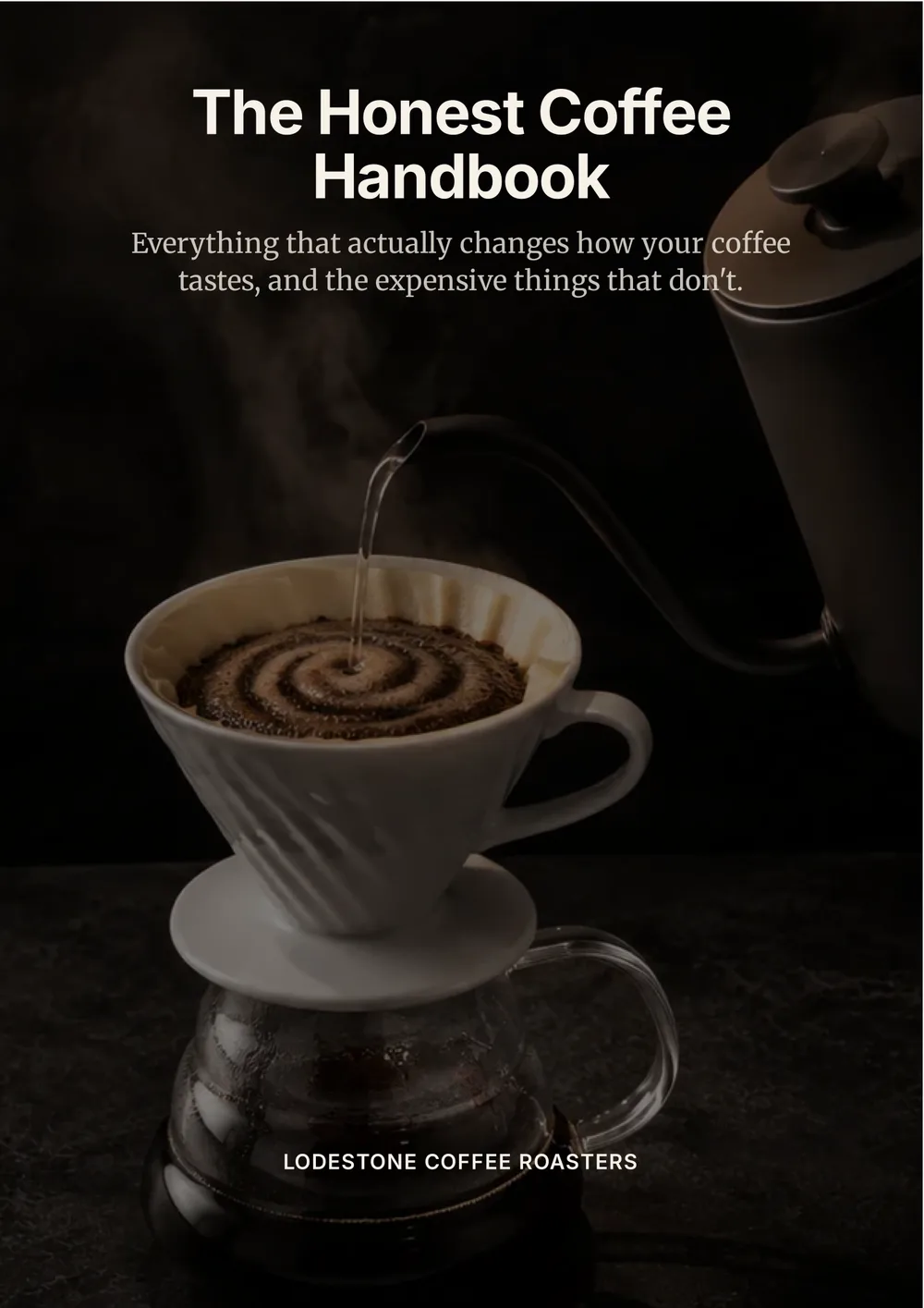
Why your coffee tastes sour or bitter, what actually fixes it, and the expensive gear that changes nothing.
Reads in your browser, no download, no email. Made with Unplain.
Why Your Coffee Tastes Bad
The two directions a cup can fail in, and why every brewing variable is a lever on the same thing.
The Bean
Degassing, the 7–21 day window, and the four things a bag worth buying tells you.
Grind
Why grind size runs the show, why consistency matters more than fineness, and a texture-based size scale.
Water
98.5% of the cup: what too-soft and too-hard water each do, and the cheapest honest fix.
Ratios & Extraction
Strength and balance are two different dials: ratios for every common method.
The Methods
V60, French press, AeroPress, moka pot and cold brew as personalities, not a ranking.
Dialing In
Brew, taste, change one thing, repeat, plus the diagnosis table that names the fix.
Tasting
Acidity, sweetness, body and finish, without the flavour-wheel vocabulary.
Gear
The shopping list in strict order of impact, and what genuinely changes nothing.
Quick Reference
Every ratio, temperature, time and fix on two pages.
Most advice about home coffee starts with equipment, which is convenient for everyone selling equipment. This handbook starts somewhere less flattering: with the fact that a €900 espresso machine will not save a cup that was ground wrong.
Coffee brewing has exactly one thing going on: water dissolving compounds out of ground coffee, and every fault is a matter of doing too much or too little of it.
Bitter, dry, ashy, coating your tongue? The water worked too long or too hard. Having taken everything good, it kept going and started pulling out the harsh, papery compounds that sit deeper in the grounds. That’s over-extraction.
Sour, thin, salty, oddly grassy? The water left too much behind. It grabbed the fast-dissolving acids and ran before it collected the sugars and heavier compounds that balance them. That’s under-extraction.
Grind size, water temperature, brew time, ratio, technique: every one of them is just a lever pushing extraction one way or the other. Once that clicks, coffee stops being a pile of superstitions (“always pour clockwise”) and becomes a system you can debug.
If you upgrade one thing, upgrade the grinder, not the kettle, not the brewer, not the beans.
A blade grinder produces boulders and dust at the same time. The dust over-extracts and turns bitter; the boulders under-extract and turn sour; the cup manages to fail in both directions at once. No technique fixes this, because there is no single correct brew time for particles that different. A burr grinder crushes beans between two surfaces a fixed distance apart and gives you particles of roughly one size. That is the difference between coffee you can control and coffee you can only endure.
Water comes next, and almost nobody talks about it despite it being 98.5% of the drink. Too soft (distilled, heavily filtered) and the cup goes flat and hollow, because minerals like magnesium are what actually bind to flavour compounds and carry them over. Too hard, which covers much of continental Europe, and high alkalinity buffers away exactly the bright notes that make good coffee worth buying.
The most common mistake in home brewing is treating them as one. Ratio controls strength: how concentrated the cup feels. Extraction controls balance: where it sits between sour and bitter.
They move independently, which is why weak-and-over-extracted is so common: too little coffee, ground too fine, steeped too long. People taste the thinness, use even less water next time, and spiral. Adjust ratio for strength. Adjust grind for balance. Keeping those two jobs separate is the single most clarifying habit available to a home brewer.
Start at 1:16 for pour-over (15 g coffee, 240 g water), 1:14 for French press, 1:13 for AeroPress. Weigh it: a tablespoon of light-roast beans and a tablespoon of dark-roast beans differ in mass by up to 20%, which is why volume-measured coffee is different every morning.
The handbook goes method by method from there, and ends with a two-page diagnosis table: what the cup tastes like, what that means, and the one thing to change next.
This is a real lead magnet from a coffee roastery, not a mock-up, and it is here because it shows what a finished Unplain PDF looks like when the subject isn’t marketing. The manuscript was written as a plain document. The cover, the contents page, the pagination, the tables, the brand colours and the closing call-to-action page were produced automatically. Whatever you know that your customers don’t, it works the same way.
Published July 22, 2026
A short, honest introduction to existentialism, and why a philosophy of anxiety turns out to be the hopeful one.
Read →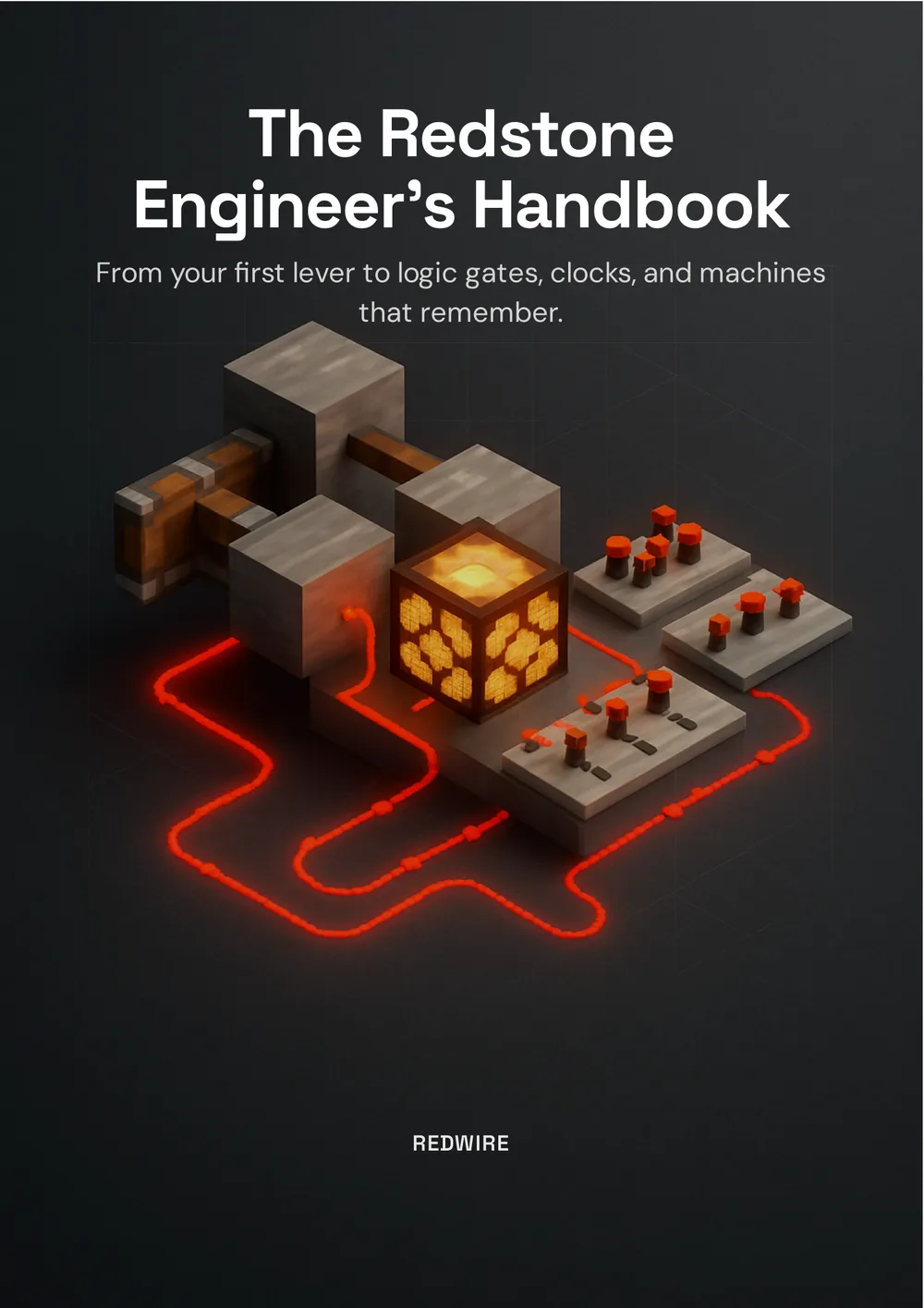
From your first lever to logic gates, clocks and machines that remember: redstone as engineering, not magic.
Read →
What actually turns content into pipeline now that buyers do 80% of the journey before they ever talk to you.
Read →The manuscript was written as plain text. Unplain added the cover, the table of contents, the page numbering, the brand colours and the closing call-to-action page, and returned a publish-ready PDF: no editor, no page-by-page layout. Your document works the same way.
No signup needed. Short ebooks are on us, forever.